

Make a donation
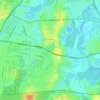
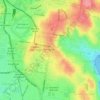
Nielsen Park topographic map
Click on the map to display elevation.
Make a donation
Nielsen Park
As is common in all coastal and estuarine areas of the Sydney Region, the Park contains many rock outcrops, particularly along the foreshore headlands. These are given some added interest by the remnants of the effect of a basalt dyke that runs from Mount Trefle to Bottle and Glass Point resulting in the unusually formed rock formations still visible. The native vegetation consists of tall heath along the western foreshore containing Allocasuarina portuensis, Smooth-barked Apple and Port Jackson Figs associated with the various exposed sandstone outcrops. In the northern and eastern slopes of the hill formations exist also Tick Bush, Tea Tree, She-oak, bushy Needlewood, Banksia and pockets of Smooth-barked Apple trees. In the lower slopes and flat areas there are stands of Sydney Peppermint, Red Bloodwood and some Port Jackson Figs. Low-level vegetation also contains Sweet Pittosporum, Cheese Tree, Blueberry Ash and a ground cover of Kangaroo Vine. Introduced Plantings and Modifications to Land Form. Apart from the introduced lower grassed areas, other newer introduced tree plantings include Tuckeroos, Brush Box and Moreton Bay Figs. Plantings include those along Notting Parade and around the W. A. Notting Memorial, the Hill Fig Avenue, tree plantings adjacent to the cottage and the Brush Box Tree boundary planting along Greycliffe Avenue and Vaucluse Road. The introduced plantings originally related to the original layout of Greycliffe House and then later to the establishment of the Trust and public recreation. These two uses can be understood from the landscape plantings. In its earlier known state the Park was bisected by a small watercourse known as Shark Creek which flowed into a lagoon behind Shark Beach that drained into the harbour at the north end of the beach. This system has now been replaced by a series of large diameter pre-cast concrete pipes with grassed areas extending over the former creek. It is likely that the land around this creek would have been heavily timbered with dense undergrowth which would have thinned out at the higher elevations.
Make a donation
About this map

Name: Nielsen Park topographic map, elevation, terrain.
Average elevation: 14 m
Minimum elevation: -1 m
Maximum elevation: 95 m
Make a donation
Other topographic maps
Click on a map to view its topography, its elevation and its terrain.

Make a donation

Wentworth Falls
Australia > New South Wales > Sydney
Wentworth Falls (postcode: 2782) is a town in the Blue Mountains region of New South Wales, situated approximately 100 kilometres (62 mi) west of the Sydney central business district, and about 8 kilometres (5.0 mi) east of Katoomba, Australia on the Great Western Highway, with a Wentworth Falls railway…
Average elevation: 708 m
Make a donation

Lane Cove National Park
Australia > New South Wales > Sydney
The park includes areas of land which are part of Ku-ring-gai, Ryde, and Hornsby local government areas with small areas of the park in Willoughby, Lane Cove and Hunter's Hill local government areas on the banks of the lower reaches of the river. The park is surrounded on all sides by developed suburban areas…
Average elevation: 81 m


Make a donation



Make a donation


Make a donation


Make a donation


Make a donation

Cammeray
Australia > New South Wales > Sydney
Prior to the 1920s, the suburb was known as Suspension Bridge reflecting the now Long Gully Bridge that joined Northbridge to Cammeray. Cammeray was slow to develop mainly due to its steep topography and remoteness from transport.
Average elevation: 66 m


Make a donation

Mount Colah
Australia > New South Wales > Sydney
Mount Colah is 5 km north of Hornsby, the nearest major town centre. It is one of the most northerly suburbs of Sydney and is where the "Welcome to Sydney" sign is located. Mount Colah is the second highest suburb in Sydney by elevation. Considered one of Sydney's leafier suburbs, streets are clustered around…
Average elevation: 152 m
Make a donation


Make a donation


Make a donation


Make a donation

Ku-ring-gai Chase National Park
Australia > New South Wales > Sydney
Ku-ring-gai Chase is part of the Hornsby Plateau, a massive block of sandstone tilting upwards to the north. The park comprises a plateau with an elevation of generally 150–200 m above sea level. Between 250 and 200 million years ago, sand silt and mud was deposited by rivers across flood plains. These…
Average elevation: 83 m
Make a donation


Make a donation

Hyde Park
Australia > New South Wales > Sydney
We know it was timbered, as was the rest of the topography, from the early drawings of the settlement, and Director of the Botanic Gardens, Sydney J. H. Maiden has suggested that the dominant species were probably white or brittle gum (Eucalyptus micrantha), blackbutt (E.pilularis), bloodwood (Corymbia…
Average elevation: 30 m


Make a donation


Make a donation


Woodford
Australia > New South Wales > Sydney
Woodford is a village in the Blue Mountains in New South Wales, Australia, about 90 kilometres west of Sydney. Its elevation is 609 metres (1,998 ft) above sea level. It is situated on the Great Western Highway and has a railway station (opened in 1868 as Buss's Platform) on the Main Western railway line…
Average elevation: 544 m
Make a donation

Make a donation



Make a donation

Smithfield
Australia > New South Wales > Sydney
Established in 1836, Smithfield was the first major settlement of the Fairfield LGA. The original 1838 summary plan of Smithfield shows the suburb laid out in a grid pattern with most of the streets having the same names as they do today. Its altitude ranges from 21 to 48 m (69 to 157 ft) above sea level.…
Average elevation: 33 m

Make a donation


Make a donation



Gregory Hills
Australia > New South Wales > Sydney
Gregory Hills is a suburb of Sydney in the state of New South Wales, Australia in Camden Council. The suburb was assigned on 1 August 2008. The suburb was named from the topography of the local area and from the original St Gregory's Chapel on the Marist Brothers land.
Average elevation: 109 m
Make a donation

Make a donation

Make a donation


Make a donation