

Make a donation
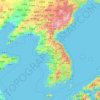
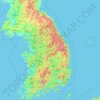
South Korea topographic maps
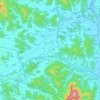
Click on a map to view its topography, its elevation and its terrain.



Make a donation


Make a donation


Make a donation


Make a donation


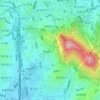
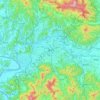
Seoraksan National Park
The reserve has an area of 163.6 square kilometres (63.2 sq mi) and includes many mountain peaks measuring over 1,200 metres above sea level, the tallest being Daecheongbong, at an altitude of 1,708 metres (5,604 ft). The ranges are composed largely of dissected granite and gneiss. The annual precipitation is…
Average elevation: 611 m
Make a donation


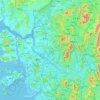
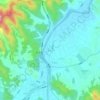
Gimcheon
Mt. Hwangaksan (1,111m in elevation), home of Jikjisa, is located in the Sobaeksan Mountains. The area is a habitat for many cranes that reside on this mountain. This location is also known for its pine forests, streams, fall foliage and snowscapes.
Average elevation: 263 m

Make a donation

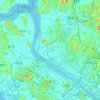
Pyeongchang-gun
Pyeongchang (English: /ˌpjʌŋˈtʃɑːŋ/ pyung-CHAHNG, Korean: [pʰjʌŋtɕʰaŋ]; in full, Pyeongchang-gun [pʰjʌŋtɕʰaŋɡun]) is a county in the province of Gangwon-do, South Korea, located in the Taebaek Mountains region. It is home to several Buddhist temples, including Woljeongsa. It is about 180…
Average elevation: 658 m
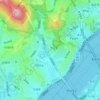


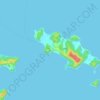
Ulleungdo Island
South Korea > Ulleung-gun > Namyang-ri
Ulleungdo (also spelled Ulreungdo; Hangul: 울릉도, IPA: [uɭːɯŋdo]) is a South Korean island 120 kilometres (65 nmi; 75 mi) east of the Korean Peninsula in the Sea of Japan, formerly known as Dagelet Island or Argonaut Island in Europe and sometimes referred to as Matsushima on 19th-century maps.…
Average elevation: 189 m
Make a donation
Make a donation

Make a donation

Dokdo-ri
The Liancourt Rocks, known in Korea as Dokdo (Korean: 독도) and in Japan as Takeshima (Japanese: 竹島), are a group of islets in the Sea of Japan between the Korean Peninsula and the Japanese archipelago administered by South Korea. The Liancourt Rocks comprise two main islets and 35 smaller rocks; the…
Average elevation: 0 m


Make a donation


Make a donation


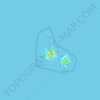
Dokdo Island
South Korea > Ulleung-gun > Dokdo-ri
The Liancourt Rocks, also known by their Korean name of Dokdo or their Japanese name of Takeshima, are a group of islets in the Sea of Japan between the Korean peninsula and the Japanese archipelago administered by South Korea. The Liancourt Rocks comprise two main islets and 35 smaller rocks; the total…
Average elevation: 0 m
Make a donation


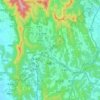
Extent of Japanese claim at Dokdo
The Liancourt Rocks, known in Korea as Dokdo (Korean: 독도) and in Japan as Takeshima (Japanese: 竹島), are a group of islets in the Sea of Japan between the Korean Peninsula and the Japanese archipelago administered by South Korea. The Liancourt Rocks comprise two main islets and 35 smaller rocks; the…
Average elevation: 0 m
Make a donation



Make a donation


Make a donation



Make a donation


Make a donation


Make a donation


Make a donation
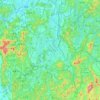
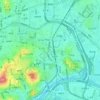
Daejeon
In 1973, Buk-myeon and Yuseong-myeon of Daedeok-gun were each elevated to Sintanjin-eup and Yuseong-eup, respectively. In 1977, the ward system (gu-je) was implemented in Daejeon, establishing two wards: Jung-gu and Dong-gu. In 1983, Daejeon further expanded by incorporating the entire areas of Yuseong-eup and…
Average elevation: 160 m


Make a donation

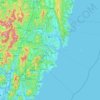
Anyang-si
The main river is Anyang River (one of the four main tributaries of the Han River in Seoul), which is 32.2 km (20.0 mi) long. It has a basin area of 275 km2 (106 sq mi), fed by 21 tributaries. The center of the overall elliptical basin topography is low and flat. The river runs through the center of Anyang and…
Average elevation: 126 m

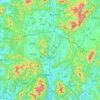
Make a donation

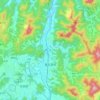
Dong-gu
The city area is developed on a hill with an elevation of 30–40 m above sea level, and the reclaimed land on the north coast is formed as a seashore industrial complex, forming a part of the Incheon seashore industrial zone and connected to the Juan and Bupyeong industrial complexes. Although the population…
Average elevation: 15 m


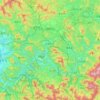
Make a donation
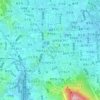

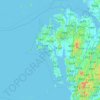
Make a donation

Make a donation


Make a donation